It's the first question every dealer asks, and the hardest one to get a straight answer to. Search "car dealership website cost" and you get agencies hiding the number behind a "request a quote" form, or a $99 template shop that will hand you the same site as the dealer down the road. So here is the honest version, with real ranges and what actually drives the price.
The short answer
A proper, custom car dealership website in 2026 is best thought of as a ballpark that moves with the scope, not a fixed price sticker. These are the honest bands for a site built specifically for a dealership, not a generic small-business template.
| What you're buying | Rough scope (once-off) | Ongoing |
|---|---|---|
| Template site (DIY / cheap shop) | $100 – $900 | $20 – $60/mo |
| Custom dealership site + inventory listings | From around $2,500 | $150/mo |
| Full showroom + inventory feed + text capture | From around $4,000 | $150/mo |
| Website + the systems behind the lot | $8,000+ | $150/mo+ |
Our own custom builds start from around $2,500 upwards, depending on the scope of the project, plus $150/month for hosting and support. Think of it as a starting point, not a menu price: what you actually pay depends on how much you're building. It's the honest floor for something custom that's built to rank and convert, not a theme with your logo dropped on top.
What actually drives the number
Two dealership sites can be $2,000 apart for reasons that have nothing to do with how they look. Here's where the money goes.
1. Template versus custom
A template is cheap because the work was already done, for someone else. The problem is every dealer using that theme looks identical, and buyers can smell it. A custom dealership website is designed around your stock, your brand and your town, which is what earns trust from a buyer about to spend $25,000. That design work is most of the cost, and most of the return.
2. Your stock, and how it gets on the site
The single biggest thing that separates a real dealership site from a brochure is stock. Manually re-uploading cars every week is a job nobody keeps up with, so listings go stale and buyers bounce. An auto-updating stock feed, the same one we built for Dart Motors, keeps the cars on your site matching the cars on your floor without anyone touching it. That's engineering, and it's worth paying for.
3. Lead capture
A site that looks good but has no way to catch an enquiry at 8pm is a poster, not a salesperson. One-tap texting on every car, contact forms and click-to-call all cost a little more to wire up properly, and they are the part that actually pays you back.
4. The systems behind it
Some dealers stop at the website. Others go further into the systems that run the lot: a stock portal you manage yourself, lead and sales tracking, even the finance book on software. That's where the number climbs past $8,000, and it's optional. It's also exactly what Dart became, one step at a time.
The right way to think about the price
Don't compare a dealership website to another website. Compare it to a deal.
Front-end gross on a used unit is running about $1,670, and F&I adds roughly another $2,515 on top. Call it $4,000 in total gross on a car. A custom site costs less than a single deal, and you'll almost certainly close one before the build is even finished.
One caveat worth being straight about, because plenty of agencies aren't: that comparison only works on total gross. If you look at front-end alone, a $2,500 site costs more than the car, and anyone quoting you the "less than one car" line without saying which number they're using is hoping you don't check.
There's a second way to weigh it that's usually the bigger number, and it isn't about a sale you still have to go and win. It's about the sales you have already paid for and are losing.
Across 22,500 dealerships, 43% of internet leads never get a real phone call, and the average dealer takes an hour and 38 minutes to respond.
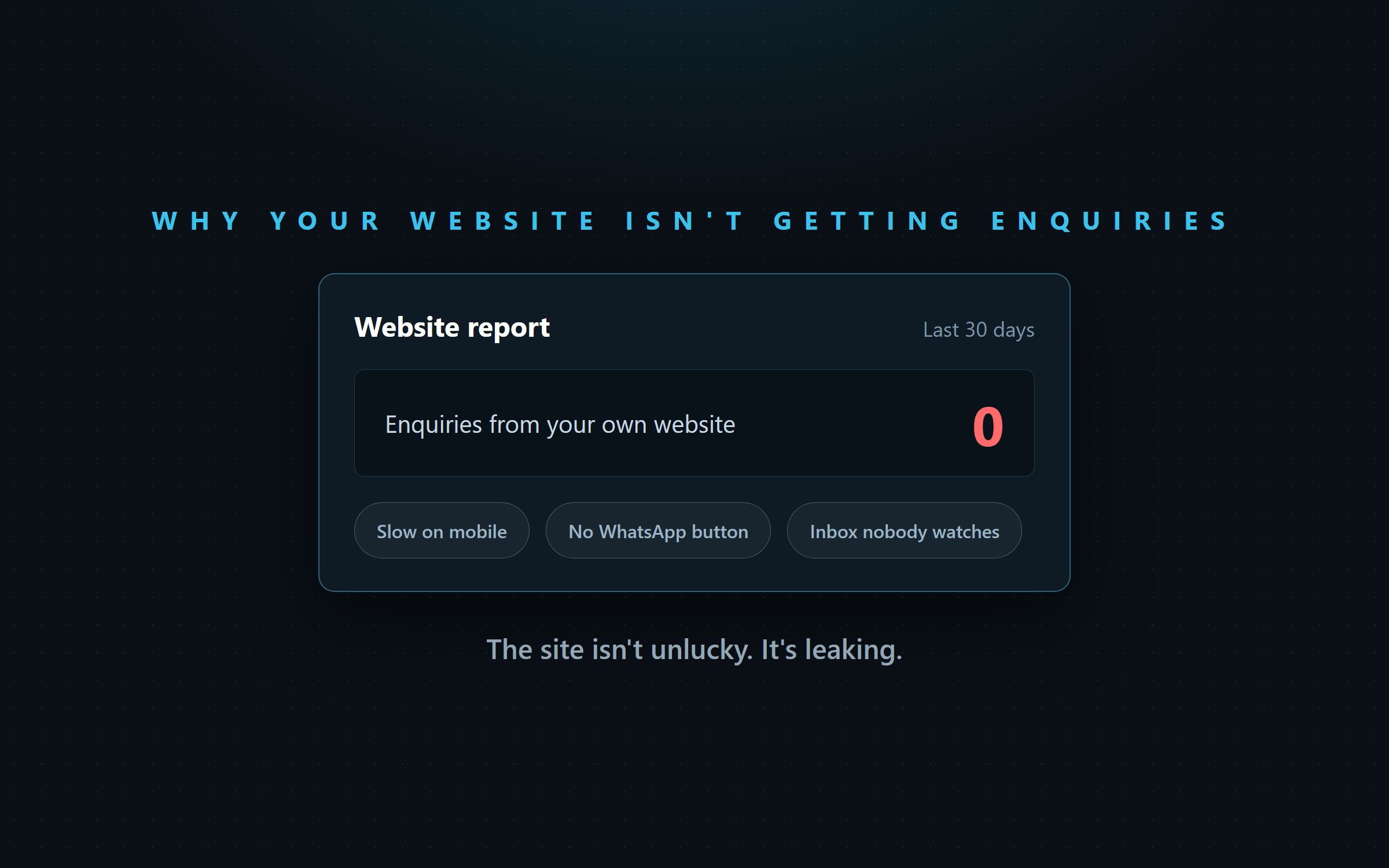
You bought those leads. The advertising is already spent, the shopper already raised a hand, and nearly half of them go nowhere because nothing captured or routed them. A site that catches every enquiry, tags where it came from and puts it in front of a human quickly is not new spend, it is recovery of old spend. That is a far easier number to justify than "buy a website."
The math on your own numbers: take the leads you bought last month, multiply by the share nobody called back, and multiply that by your closing rate and your gross. That is the figure the site is competing against, and for most dealers it dwarfs the build cost. We'll do this with you, on your real figures, in the free audit.
What "cheap" actually costs you
A $99 template feels like a win until you count what it loses. A dated or thin site tells a shopper who is deciding between you and two other lots that you are the least serious of the three, and they quietly go elsewhere. Worse, cheap templates almost never capture properly, so the leads you do earn leak straight back out. The cheapest site is the one that never converts, no matter what you paid for it.
What to ask for when you get a quote
- Is it custom, or a template? Ask to see other sites they've built on the same theme.
- Does my stock update automatically, or do I re-upload cars by hand?
- How does an enquiry reach me, and how fast? Is text capture wired in?
- Do I own the site and the data, or am I renting it?
- What does the monthly cover, and what happens if I want changes?
If the answers are vague, the price doesn't matter. If they're clear, you can judge the number against what it'll bring back.
The honest bottom line
Budget from around $2,500 upwards for a custom dealership site that's built to win buyers, depending on the scope, plus $150/month to keep it fast, secure and current. It climbs from there as you add the stock feed, the marketing and the systems. Go cheaper than that and you're usually buying a poster that quietly costs you sales.
The best way to know what your dealership needs is to see where your current site is leaking. That's what a free audit shows you, in a few minutes, on your own numbers.